Lawn Care: How to Keep Your Lawn Looking Beautiful for Longer
Proper care is essential for a healthy, beautiful lawn without weeds. Mowing, watering, dethatching, aerating, liming, fertilizing, and overseeding: This guide shows you when each step is right and provides helpful tips for lawn care.
Contents
- Why is lawn care so important?
- What tasks are involved in lawn care?
- Lawn Care Calendar: What do I do when?
- Questions and Answers
Why is lawn care so important?
Even though lawns are relatively low-maintenance, they still need a little care to stay green and healthy. Too much moisture is just as harmful as too little water, traces of pests like moles or voles ruin the overall look, and thatched lawn prevents enough light and air from reaching the grass. On top of that, weeds and diseases spread much faster on an uncared-for lawn. If you want to enjoy your lawn for a long time, you should do a minimum amount of maintenance.
What tasks are involved in lawn care?
Generally, there are six main tasks in lawn care. Once you get into the routine, it becomes quick and easy. Even a large lawn area can be easily maintained with the right equipment without the professional help of a gardener.
Mow the lawn
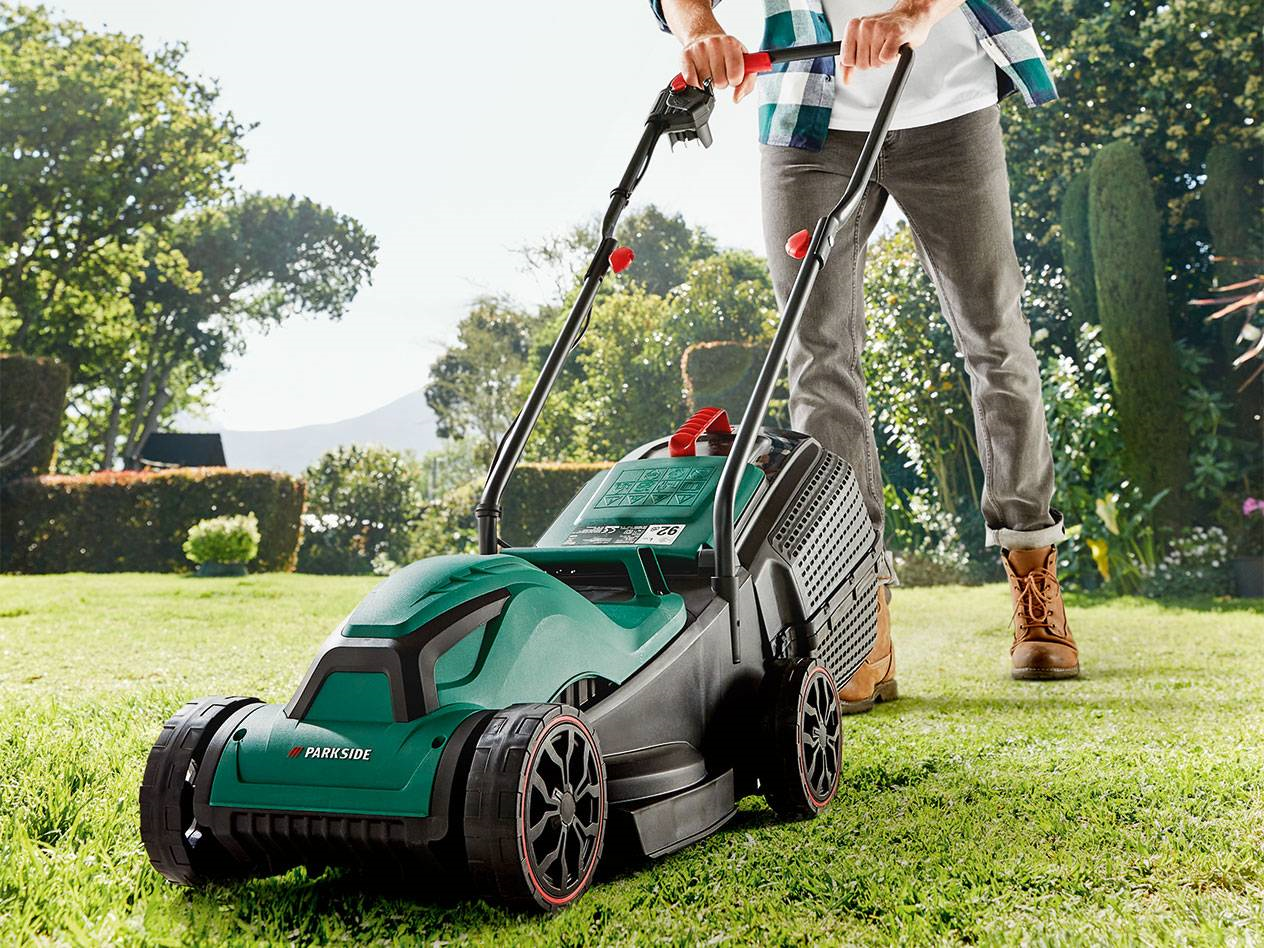
When you think of a lawn, the first thing that comes to mind is mowing the lawn. Regular mowing has several benefits:
- A mowed lawn always looks neat and tidy – an important point for all garden owners who aren't aiming for a wild garden.
- In addition, a mowed lawn is thicker and more hard-wearing, making it less susceptible to weeds and diseases. However, a radical short cut every few weeks is not recommended; instead, the lawn should be trimmed once or twice a week to a height of approximately 1.2 inches (ornamental lawn) or a maximum of 2 inches (utility lawn).
Great selection of lawn mowers
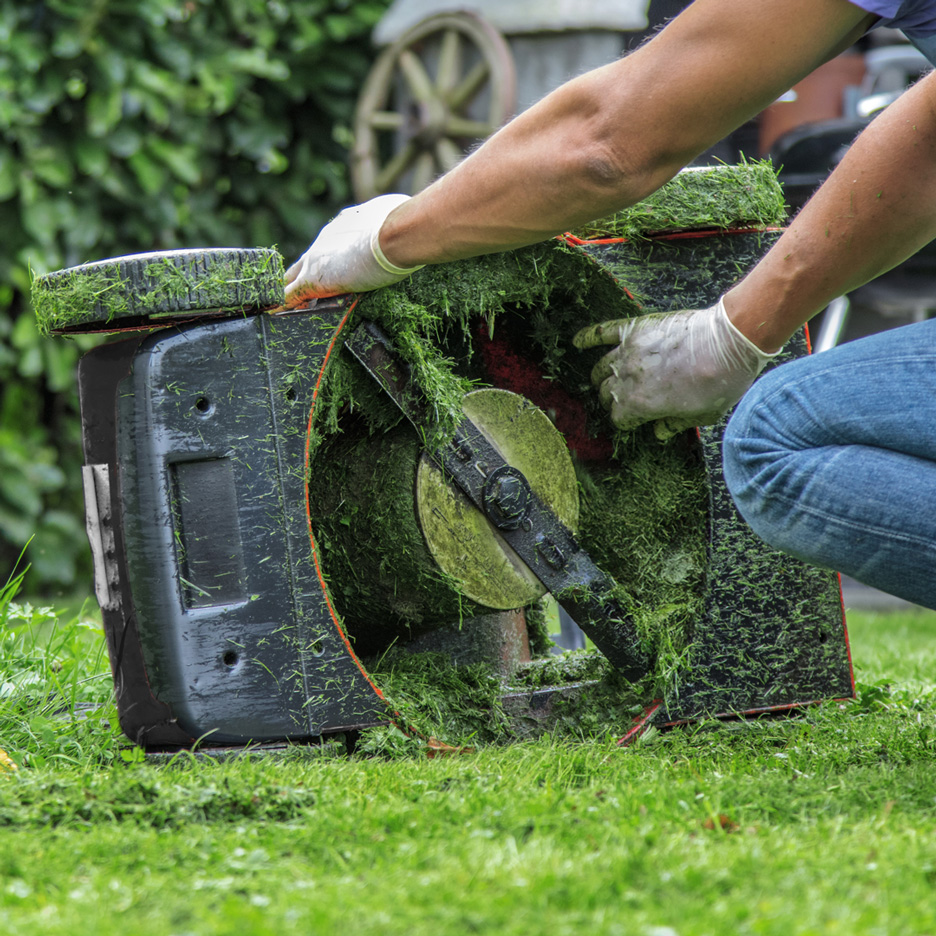
A lawn mower is the ideal tool for cutting flat areas. The selection ranges from simple manual lawn mowers to gasoline and electric lawn mowers, all the way to lawn tractors for large areas. Robotic lawn mowers are also increasingly common in stores. On the other hand, narrow edges and corners can be shaped with a string trimmer. With the right equipment and the right lawn mowing tips, your green space will look beautiful again in no time.
Equipment List
- Lawn mower
- String trimmer
Watering the lawn
Like any other plant, lawns need a certain amount of water to survive. Especially in the summer, it is therefore necessary to water the lawn regularly. Finding the right balance is key. A newly laid lawn requires a lot of water, especially in the beginning, so that the roots can take hold properly. Here, you can easily water throughout the entire day.
Lawns that have been growing in the garden for a longer period of time should be watered heavily once a week. The roots of the lawn reach up to four inches below the ground. Enough water must be applied so that the moisture can penetrate to this depth. On average, 20 to 30 minutes of watering is sufficient – preferably after sunset, so that the water does not evaporate immediately but can soak into the soil.
For smaller areas, a garden hose with a spray nozzle can be used for watering. If you do not want to water with a hose or have a larger lawn area to maintain, you can also use mobile or permanently installed lawn sprinklers. Some models can be controlled with a watering computer, so that watering is done fully automatically.
Equipment List
- Garden hose with spray nozzle
- Lawn sprinkler
- Optional: Watering computer
Dethatching and aerating your lawn
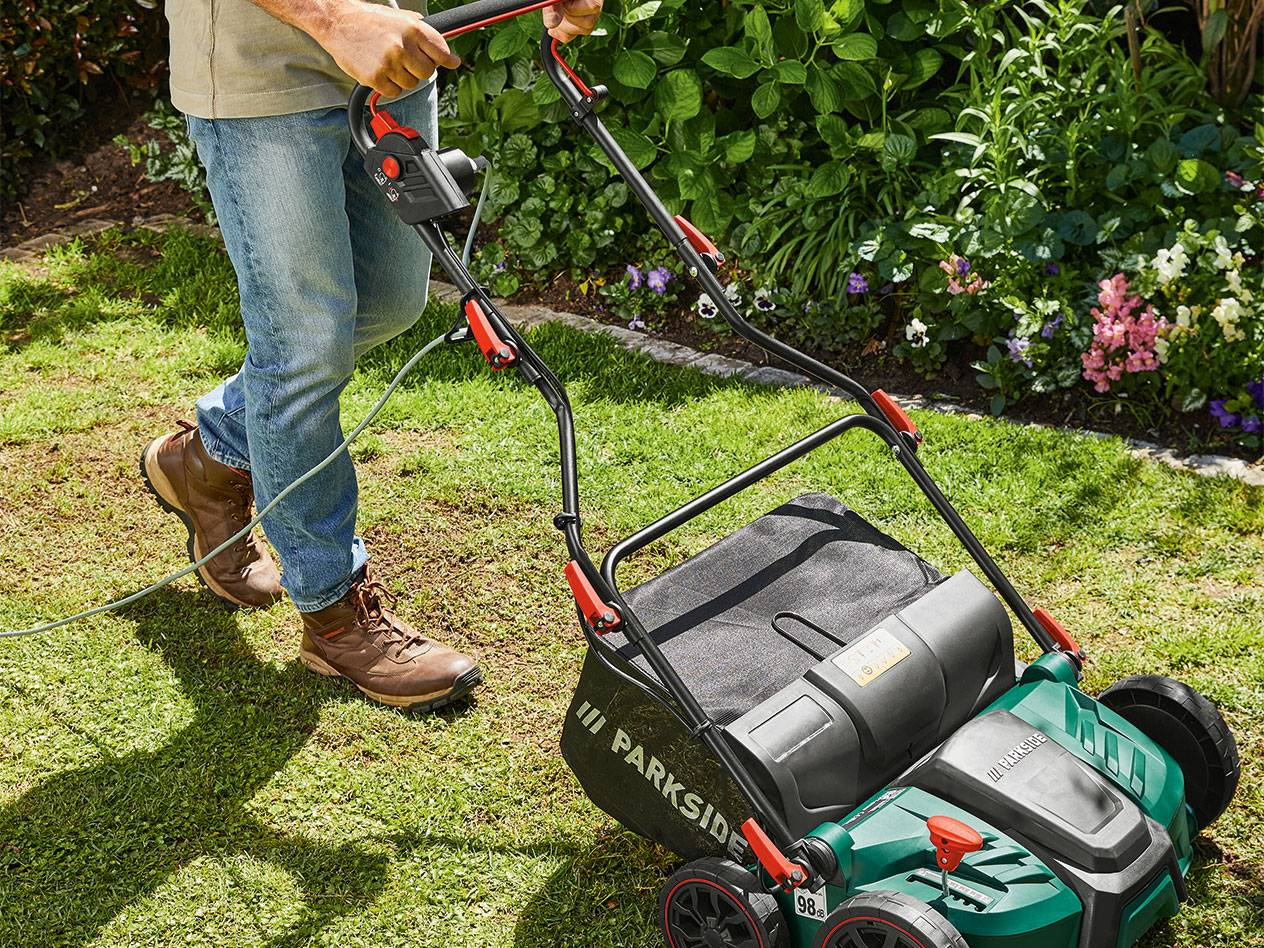
Over the course of the cold seasons, it is inevitable that grass blades will become matted or die off. Moss also likes to form when it is particularly damp and unpleasant outside. In addition, leaf debris and other organic residues prevent the lawn from breathing. Mold also has an easy time in these areas. That is why it is important to clear the lawn of dead debris from the winter in spring.
During scarifying, the lawn is combed, so to speak: thatch, weeds, and plant debris are removed. Every lawn should be scarified both crosswise and lengthwise every year at the start of the gardening season. If necessary, scarifying can be repeated in the fall to remove plant and mowing debris from the summer. Later in the year, it is advisable to aerate the lawn. Unlike scarifying, where the blade penetrates a few millimeters into the ground, aerating involves punching holes into the soil. This process ensures that the soil is supplied with oxygen. Aerating should also ideally be carried out once a year. After this step, the lawn is ready for fertilizing.
Equipment List
- Electric scarifier
- Scarifying rake
- Lawn mower with aerator function
Liming your lawn
Sometimes a lawn has a special need for lime. A soil pH test will provide information about the exact composition of your soil. However, a glance at the lawn itself can also reveal a lot: if a lot of moss is growing on the lawn, this is an indication that the soil does not contain enough lime. In order to distribute the lime evenly over the lawn, a spreader is used. Once limed, you won't need to repeat the process for another two to three years. After liming, you should wait three to four weeks before fertilizing the lawn.
Equipment List
- Spreader
Reseeding your lawn
Bare patches in the lawn are not very attractive. The best time for reseeding is in the spring after scarifying. This prevents weeds from settling in the open areas. If necessary, reseeding can be repeated in the fall. Small areas can be planted by hand; for larger patches, using a spreader is recommended to ensure the seed is distributed evenly. When sowing, make sure that the seed is spread both lengthwise and crosswise. Use a rake or water with a lawn sprinkler to work the seeds into the soil. The areas must be kept constantly moist for the next four weeks so that the seeds can germinate. The new lawn can be mowed once it reaches a length of 4 inches.
Equipment List
- Spreader
- Rake
- Lawn sprinkler
Lawn care calendar: What do I do when?
Not every lawn care task is necessary or useful in every season. This table provides an overview.
Spring | Summer | Fall | Winter |
|
|---|---|---|---|---|
Mowing | Yes | Yes | No | No |
Watering | No | Yes | No | No |
Dethatching | Yes | No | Yes | No |
Aerating | Yes | No | No | No |
Liming | Yes | No | Yes | No |
Fertilizing | Yes | Yes | No | No |
Reseeding | Yes | No | Yes | No |
Questions and Answers
Moles are a protected species. They must not be caught, injured, or killed. There are numerous methods to deter them. Approaches that target the mole's sense of smell or hearing are particularly promising. For example, it can help to spread buttermilk, garlic water, or mothballs in the soil. However, the sound of a wind chime can also often do the trick.
The same care rules apply to sod as to seeded lawns. Here too, regular mowing, dethatching, watering, and fertilizing help to keep the lawn looking beautiful for a long time. Bare spots in the sod can be repaired either by overseeding or by laying down special small sod patches.
Depending on how severely your lawn has been damaged by the drought, different measures will need to be taken. If there are only brown spots, simply watering the lawn sufficiently will be enough for it to recover. For larger areas, reseeding is necessary. If the entire lawn and its root system are dried out or even scorched, the only solution left is a complete lawn renovation.