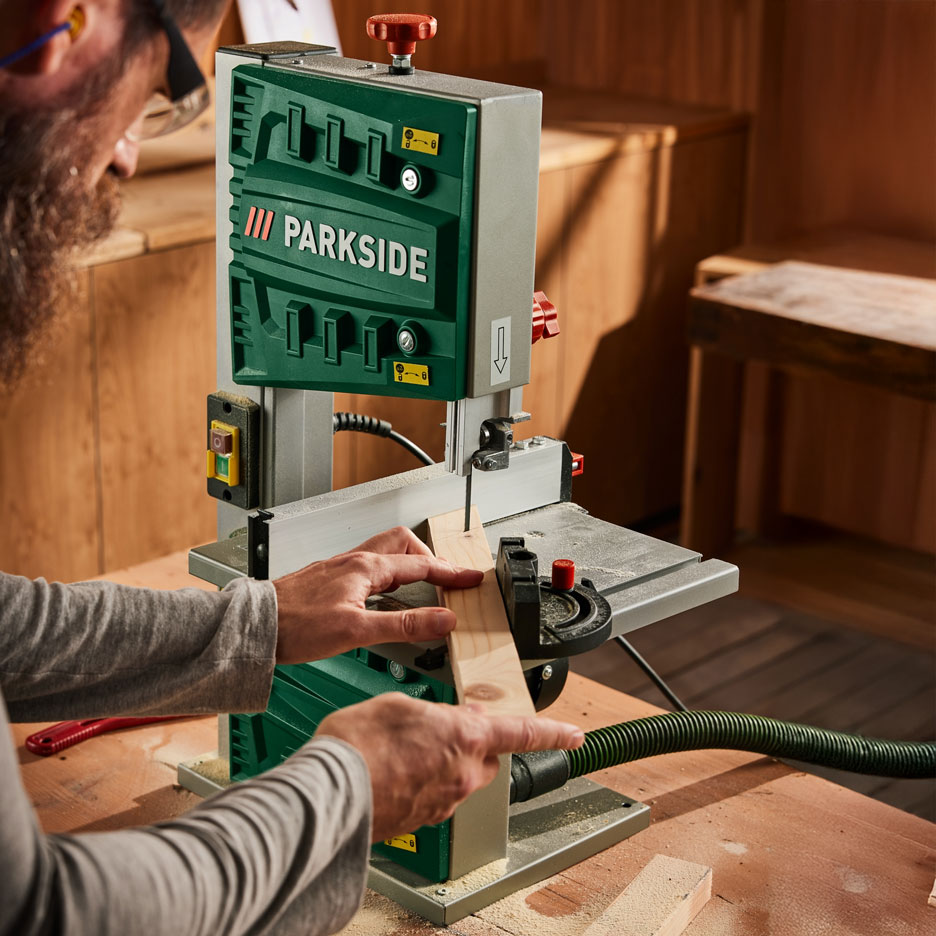
Circular Saw Blade
A circular saw allows you to reliably cut through wood, metal, plastic, and even building materials like concrete or natural stone. The actual cutting work is done by the circular saw blade. Since there are different types of circular saw blades, having some basic knowledge is helpful. This guide tells you everything you need to know about finding the right circular saw blade.
What is a circular saw blade?
A circular saw blade is a rotating cutting tool used in table saws or handheld circular saws. Regardless of their specialization, all circular saw blades share a few common features:
- round basic shape
- cutting teeth around the circumference
- suitable for cutting various materials
However, the base material, the number of saw teeth, and the intended use can vary.
Generally speaking, there are two types of circular saw blades, which differ in their manufacture and design:
- One-piece saw blades: stamped from a single base material and equipped with the desired tooth shape
- Composite circular saw blades: made of a metal core onto which cutting edges (teeth) made of other materials are soldered
Short rip and cross cuts in hardwood as well as high-quality cuts in softwood are easily achieved with one-piece circular saw blades. Composite circular saw blades, on the other hand, are better suited for hardwood and tougher composite materials. They owe this capability not least to their set (alternatingly arranged) teeth, which are wider than the blade's metal core and run through hard materials with less friction.
There are three tooth positions in total for circular saw blades:
- negative
- neutral
- positive
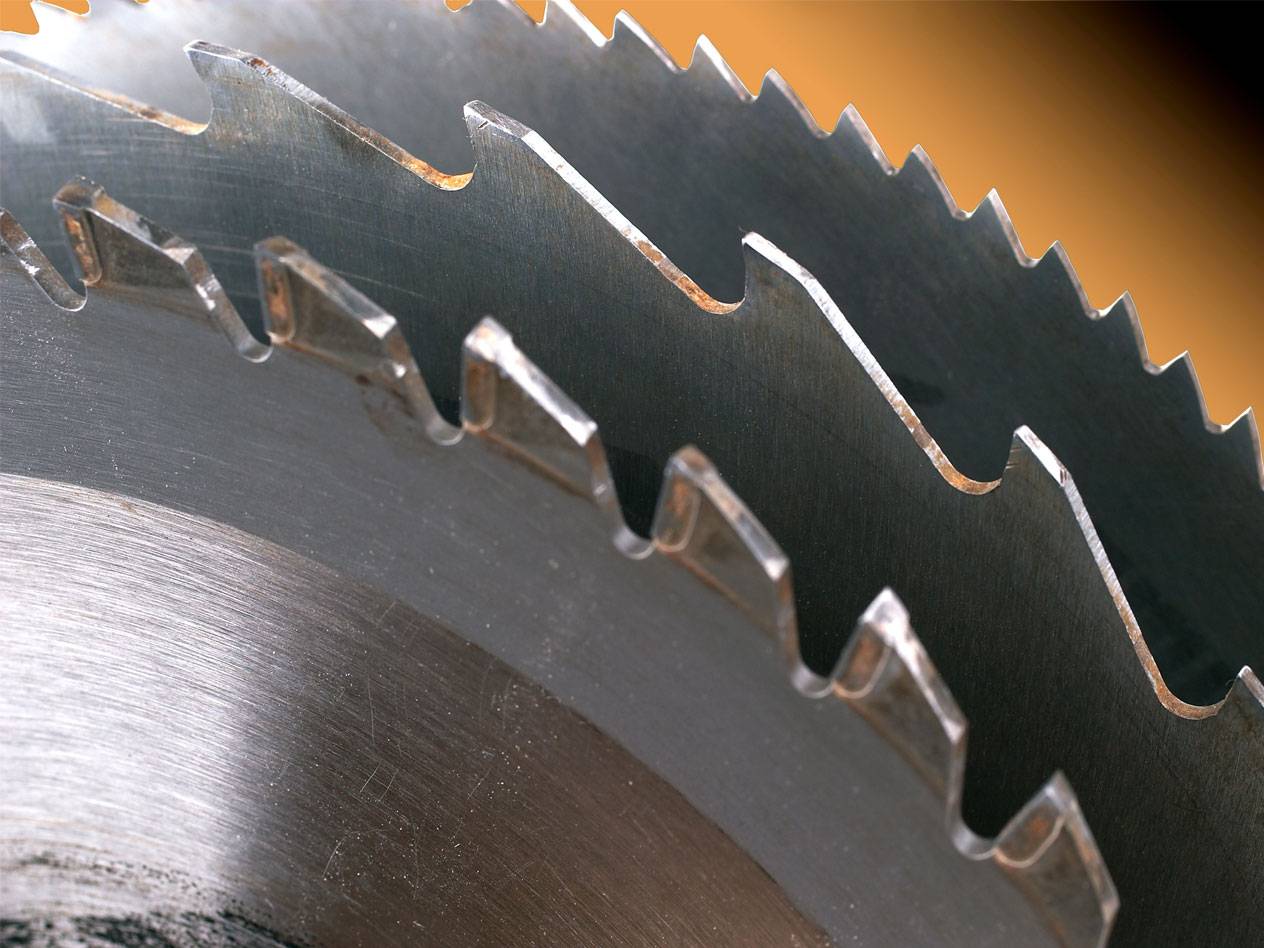
It all depends on the tooth position
With a negative tooth position, the cutting angle in the material is very flat, which is why a lot of feed force is required. This type is primarily intended for cutting hard metal such as stainless steel.
With a neutral tooth position, there is no rake angle to the center axis, putting load on the entire tooth edge. This also requires a high feed force, but the tooth edge behaves very robustly when hitting the material. Circular saw blades with a neutral position are suitable for various metals and light metals.
The positive tooth position is typical for sawing in wood. The teeth literally bite into the material and thus already perform feed work on their own. In this process, the tips in particular are heavily stressed, which is why foreign objects such as nails or screws quickly ruin the teeth.
Finding the right circular saw blade
Four properties play a key role in selecting the right circular saw blade. Regarding the teeth, their number and type are important, and the cutting width as well as the speed of the blade are also crucial.
Number of teeth
The more teeth a saw blade has, the finer the quality of the cut. Depending on the material to be cut, however, a high number of teeth is not generally recommended. Similar to the tooth position, there are three categories here:
- low: up to 36 teeth, large gullet, focus is on cutting performance, cut quality is coarse and rough, best for cuts along the grain
- high: between 36 and 48 teeth, crosscuts achieve clean results, the saw blades clog quickly during rip cuts
- very high: 60 or more teeth, very fine cut quality, use with thin materials, such as plywood, with a slow cutting speed and more feed
In principle, there should always be at least three teeth in the material during the cut to ensure clean work. Therefore, the blade diameter should be selected depending on the workpiece and its size.
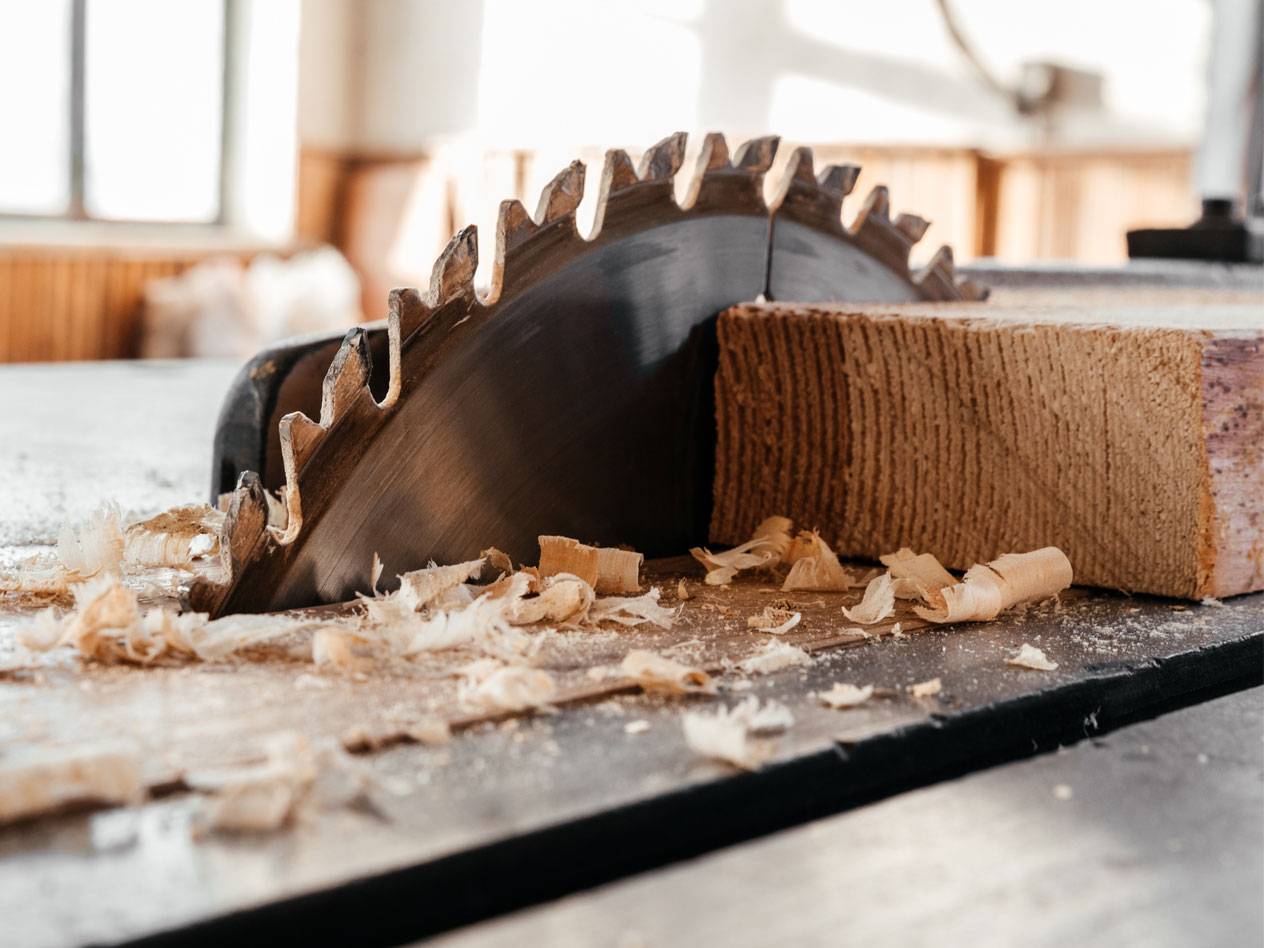
Finding the right circular saw blade
Four key characteristics play a major role in choosing the right circular saw blade. Regarding the teeth, these are their quantity and type; additionally, the cutting width and the blade's rotational speed are important.
The type of teeth is crucial for the cutting quality and durability of the circular saw blade. The most common tooth shape is the flat tooth, which is ideal for rip cuts in soft and hard wood.
Alternate top bevel (ATB) teeth have a bevel-ground back. They are frequently used as universal saw blades because they are suitable for both rip and cross cuts.
Triple chip grind (TCG) teeth are highly robust and suitable for hard materials because they are particularly resistant to foreign objects.
Cutting width
The cutting width depends on the thickness of the saw blade and its teeth. The thinner the circular saw blade, the lower the speed should be set. If the speed is too high and excessive heat is generated, there is an increased risk of accidents.
Rotational speed
The cutting speed – the speed at which the saw blade moves back and forth – should not exceed 100 meters per second. The larger the circular saw blade, the lower the speed should be set. The material being processed also dictates how high the speed is set: non-ferrous metal and plastic can be cut at up to 5,000 revolutions per minute, while wood can even be cut at up to 9,000.
How do you change a circular saw blade?
Basically, you need to secure the saw blade in place, disconnect the power supply, and loosen the fastening screw. Then, replace the blade and tighten the screw back up. Specific instructions can be found in the operating manual of your respective tool.
What should you do if the bore hole in the blade is too large?
The standard size has a diameter of 30 mm. If a blade of this size does not fit the saw, so-called reduction rings can be used. These reduce the size of the bore hole and make the circular saw blade compatible with your power tool.
How do you recognize dull circular saw blades?
Signs of dullness include slower sawing speeds, discoloration from overheating on the cut edges, increased noise levels, and vibrations. You must react to vibrations immediately, as they are a sign of an imbalance that can cause the circular saw blade to shatter. However, dull saw blades do not have to be replaced right away; they can be resharpened up to ten times.