How to Dethatch Your Lawn: The Easy Way
Give your lawn a rejuvenating boost: dethatching loosens the soil and ensures lush, green grass. What do you need to keep in mind, how do you get started, and which dethatcher is right for you? Get our top tips here.
Scarifying your lawn – what is it?
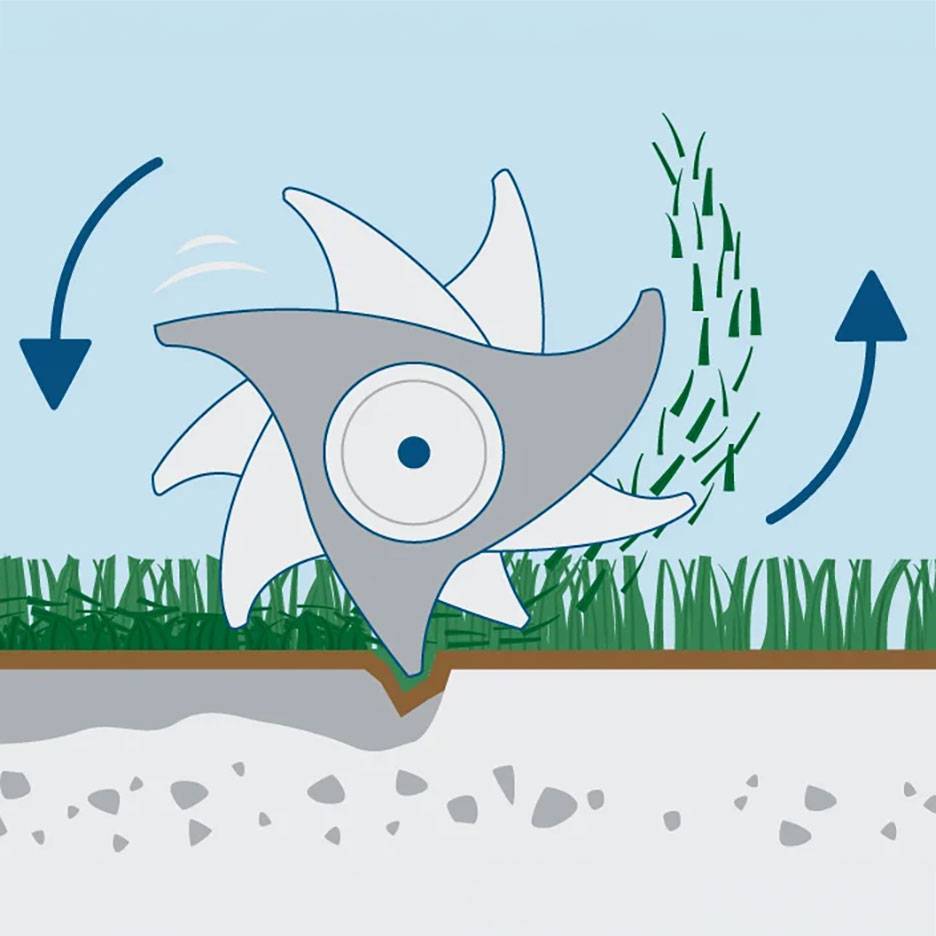
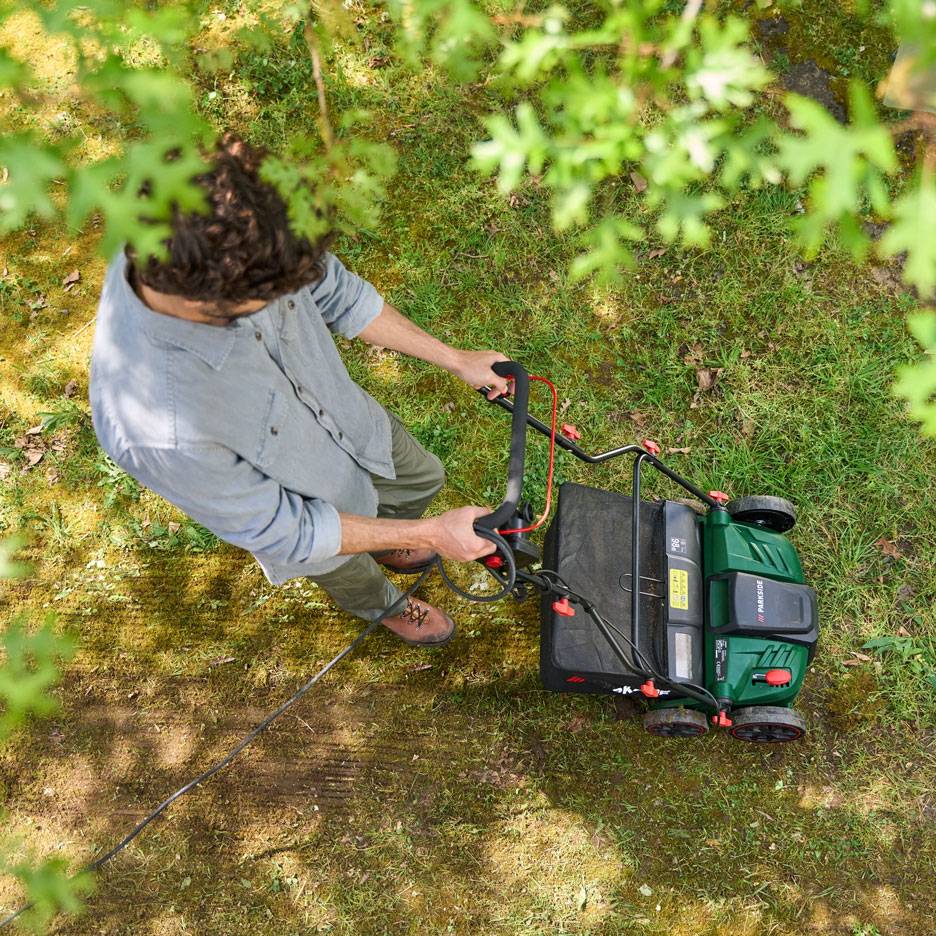
Scarifying is like a deep-cleansing exfoliation for your lawn. Using a scarifier, you score the turf and comb out mulch, thatch, and weeds from the grass. This scoring encourages the plants to grow new shoots. By combing it out, the soil can breathe much better. This prevents mold and optimizes the nutrient supply. The result? A thicker, healthier, and more beautiful lawn!
When should you scarify your lawn?
It is best to scarify your lawn in the spring – before any other lawn care tasks. This prepares the grass perfectly for the growing season. If necessary, you can scarify once more in the fall. But no more than that. Find out what else you should do throughout the year in our "Lawn Care" guide!
Which scarifier is best for you?
Scarifiers look similar to lawn mowers, but they are tailored to their own specific task and are available in various designs. Which one fits best? You decide:
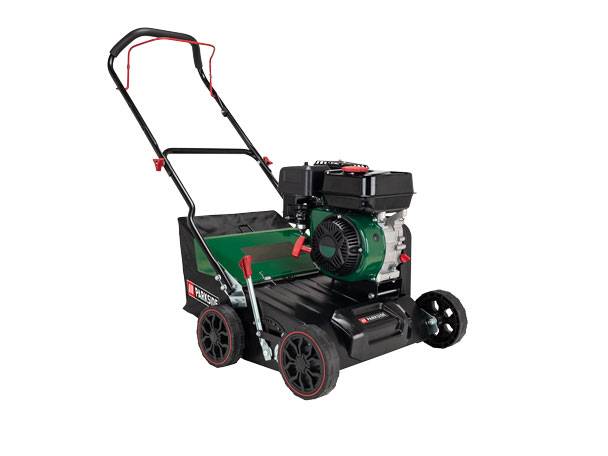 Gasoline Dethatcher
Perfect for large areas, high-performing, and featuring an impressive range.
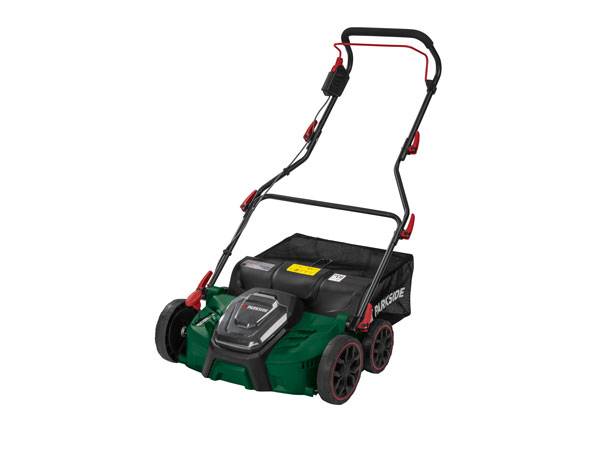 Cordless Dethatcher
Great for medium-sized areas, easy to handle, versatile, and quiet.
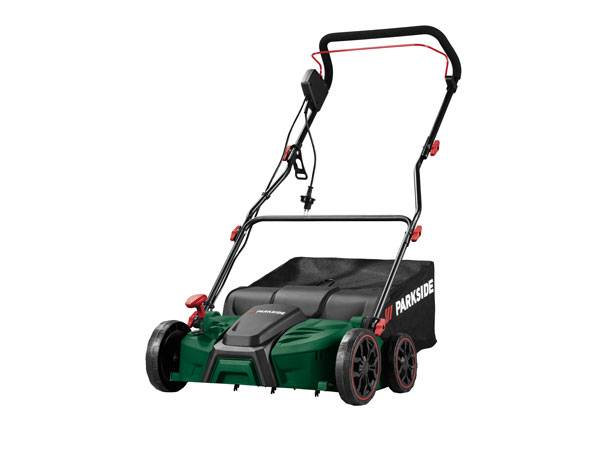 Electric Lawn Dethatcher
Perfect for medium-sized areas and also extremely quiet.
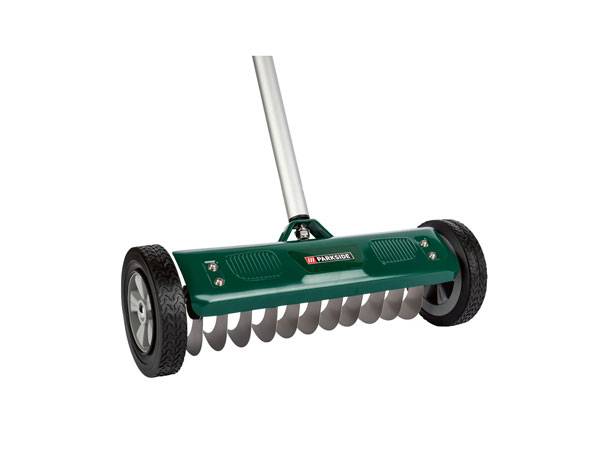 Manual Dethatcher
Ideal for small spaces, budget-friendly, and quiet.
By the way: Scarifiers with a collection bag gather up the raked-out thatch directly. There are also lawn mowers with an integrated scarifier. These 2-in-1 tools save space and money.
Dethatching Your Lawn: Four Steps to Perfect Lawn Care
- Mow the lawn
- Adjust the cutting depth
- Dethatch systematically
- Nurture the lawn
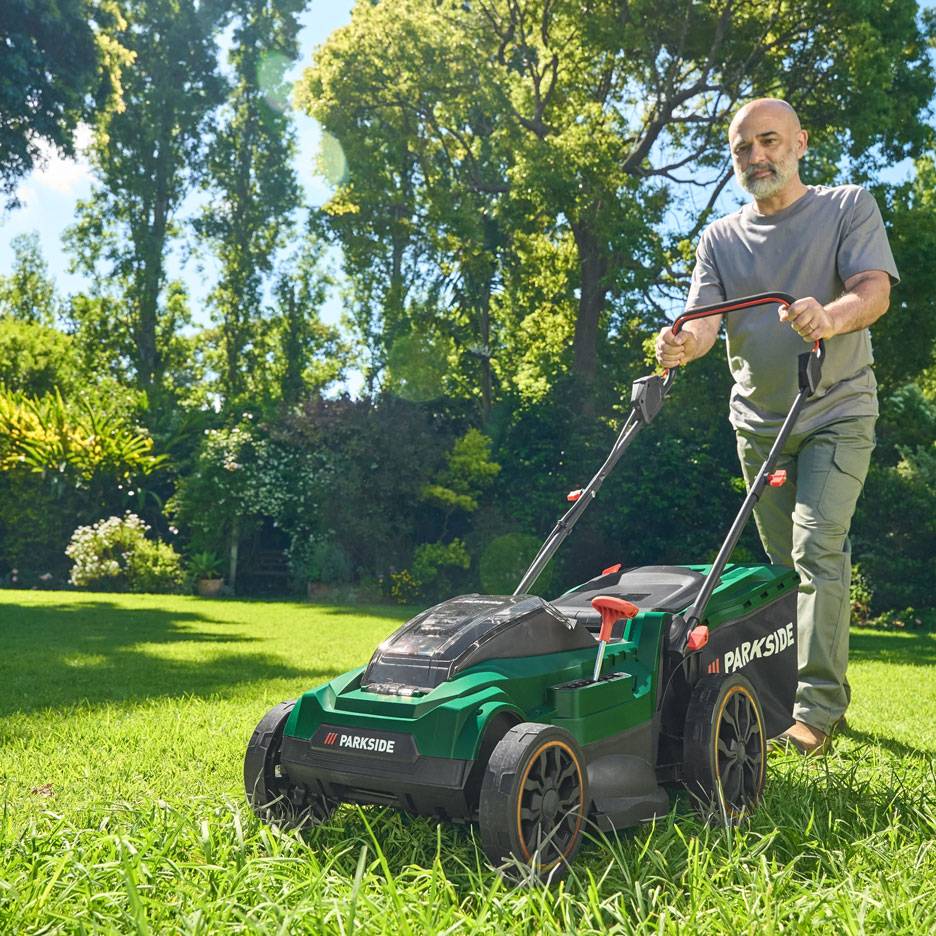
1. Mow first, then scarify
Scarifying is important for your lawn, but it also causes stress. That is why you should leave it alone for a while after scarifying. Before scarifying, you should mow it two to three times. Cut the grass blades to a length of about 0.8 inches.
2. Scarifying correctly – how deep should you cut?
Scarifiers can be adjusted to a specific cutting depth. You can determine this by placing the scarifier on the ground – the blades should just touch it. A few test yards will show if the cutting depth is set correctly. As a rule of thumb:
- For a young lawn with shorter roots, set a cutting depth of no more than 0.1 inches.
- For an older, mossy, and weed-covered lawn, work with a depth of up to 0.2 inches.
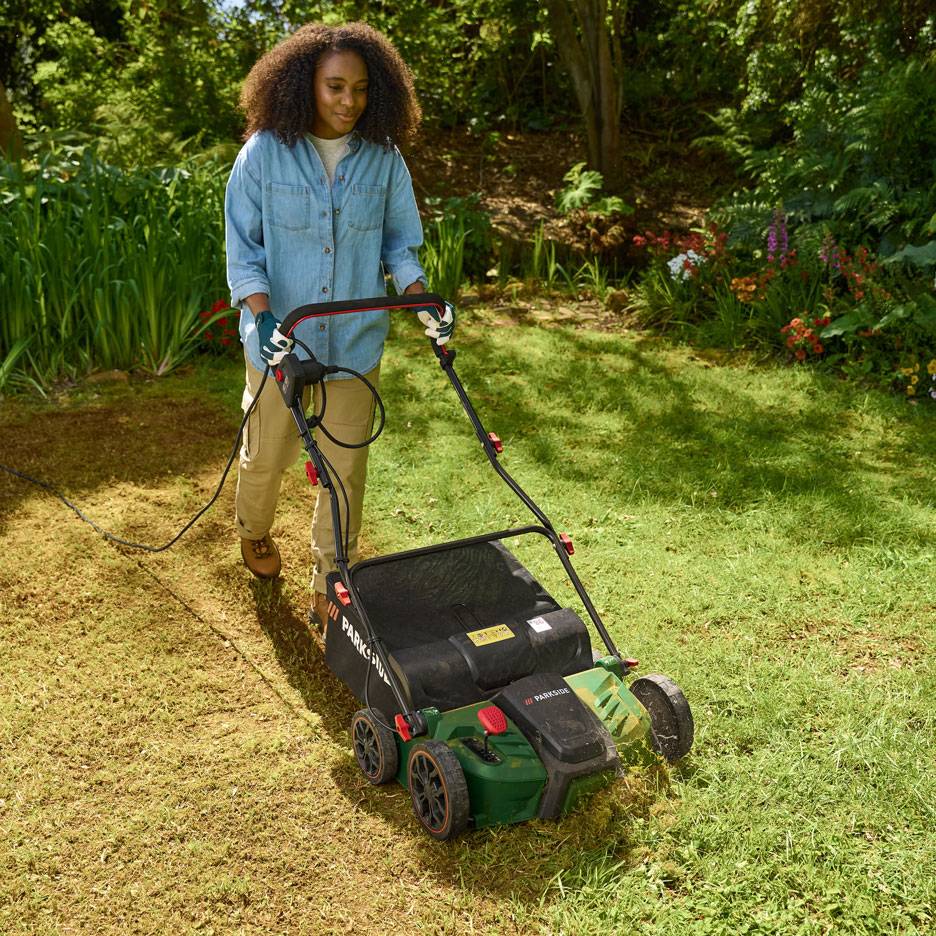
3. How do you go about scarifying?
Crisscrossing all over the lawn? Better not. Scarify the area methodically – first in precise paths lengthwise, then in precise paths crosswise. This checkerboard pattern ensures that you reach every spot.
4. What do you do after scarifying?
After deep cleaning comes deep care: If you lime, fertilize, and water your lawn after scarifying, the nutrients will reach the soil particularly effectively. If bare spots become visible during scarifying, reseed those areas with grass.
Frequently Asked Questions About Dethatching
Yes, as long as you mow the lawn before scarifying, you can do both tasks on the same day. After scarifying, however, you should give your lawn a break from mowing.
Scarify and fertilize only when the lawn is dry and the soil is slightly damp. When choosing a fertilizer, pay attention to the current nutrient needs of the soil – a test helps!
Dethatching your lawn is unnecessary if there is barely any thatch, it looks super healthy, and the weather is extremely hot or cold. You should also avoid dethatching a young lawn.
Aerating is not the same as scarifying. Aerating loosens the soil deeply to help water drain more easily. This is rarely necessary for a standard garden lawn – the aeration achieved through scarifying is usually more than enough.