Fancy baby swimming? – When you can start
Baby swimming strengthens the bond between parents and child. In most cases, it is great fun for the little ones and has a positive effect on their motor and cognitive skills. As a rule, certified aqua educators offer baby swimming classes. For carefree water fun, it is of course important to find the right time to start. If you are thinking about baby swimming for the first time and wondering what the earliest age to start is, you can guide yourself by a few recommendations regarding age and physical development.
Baby swimming – top tips and recommendations
What is baby swimming?
Baby swimming, or infant swimming, refers to special classes where parents and their babies play and move together in the water. This form of water aerobics has become increasingly popular since the 1960s, as it promotes the little ones' motor skills and has a positive effect on the mother's postpartum recovery. When babies are held on their tummies, many can even make paddling motions. However, baby swimming is not to be understood as actual swimming lessons for infants.
Who offers baby swimming classes and how much do they cost?
As a rule, you can find suitable offers at any larger swimming pool. Most baby swimming classes are offered by certified aqua educators. This has the great advantage that you learn essential holds under professional guidance during baby swimming. Swim coaches and midwives can also offer baby swimming. Typically, the classes cost between 5 and 15 dollars an hour or are billed as monthly passes. Sometimes health insurance companies reimburse the costs for baby swimming.
Should you sign up for baby swimming or wait a bit?
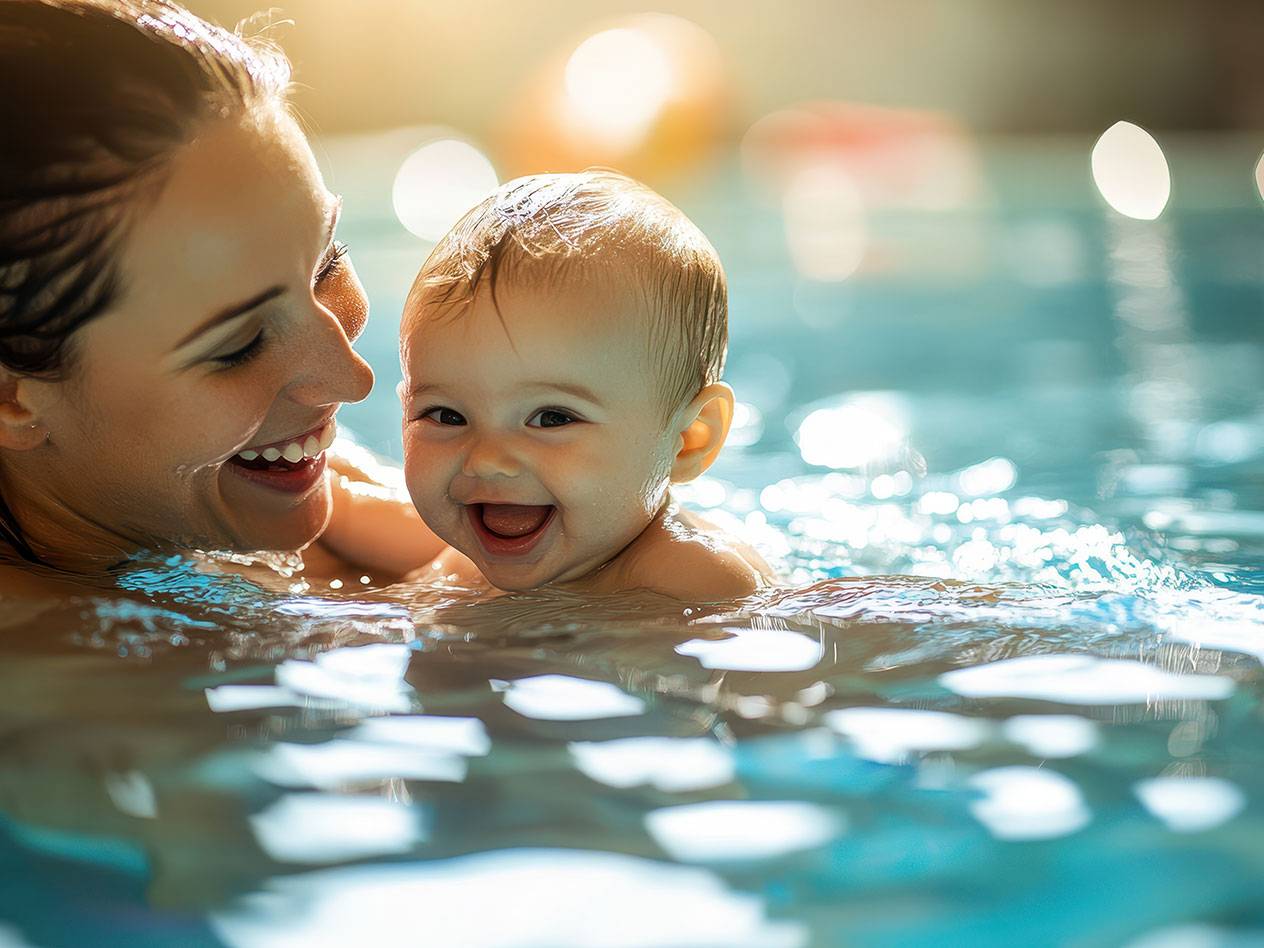
Many babies love the water. Researchers believe that it reminds them of their time in the womb. And as we adults know: water has a calming and soothing effect. However, there are also reasons against baby swimming. Your baby could react sensitively to chlorine or catch a cold. You can make the answer to the question "Baby swimming – yes or no?" easier by weighing the pros and cons according to your personal feelings.
Baby swimming – yes or no?
Benefits
- promotes your baby's motor and cognitive skills
- is fun for your baby
- strengthens the bond between mother and child
- due to the weightless environment, your baby can playfully try out new movements
- early experience with water increases self-confidence when learning to swim later on
- supports the mother's postpartum recovery
- allows parents and children to make new social connections
Drawbacks
- Chlorinated water can trigger allergies
- Babies swallow water, absorbing bacteria and germs that can lead to gastrointestinal infections, respiratory illnesses, or middle ear infections
- Critics argue that in many classes, babies are turned into passive "objects" with little opportunity for active self-discovery in the water
Baby Swimming – When Can We Start?
Exactly when you and your little one should start baby swimming depends on various factors. These include, for example, physical development and whether your baby has an increased risk of allergies. Temperament also plays an important role – every baby reacts differently to having so much water around them.
Recommended period: Between the fourth and sixth month
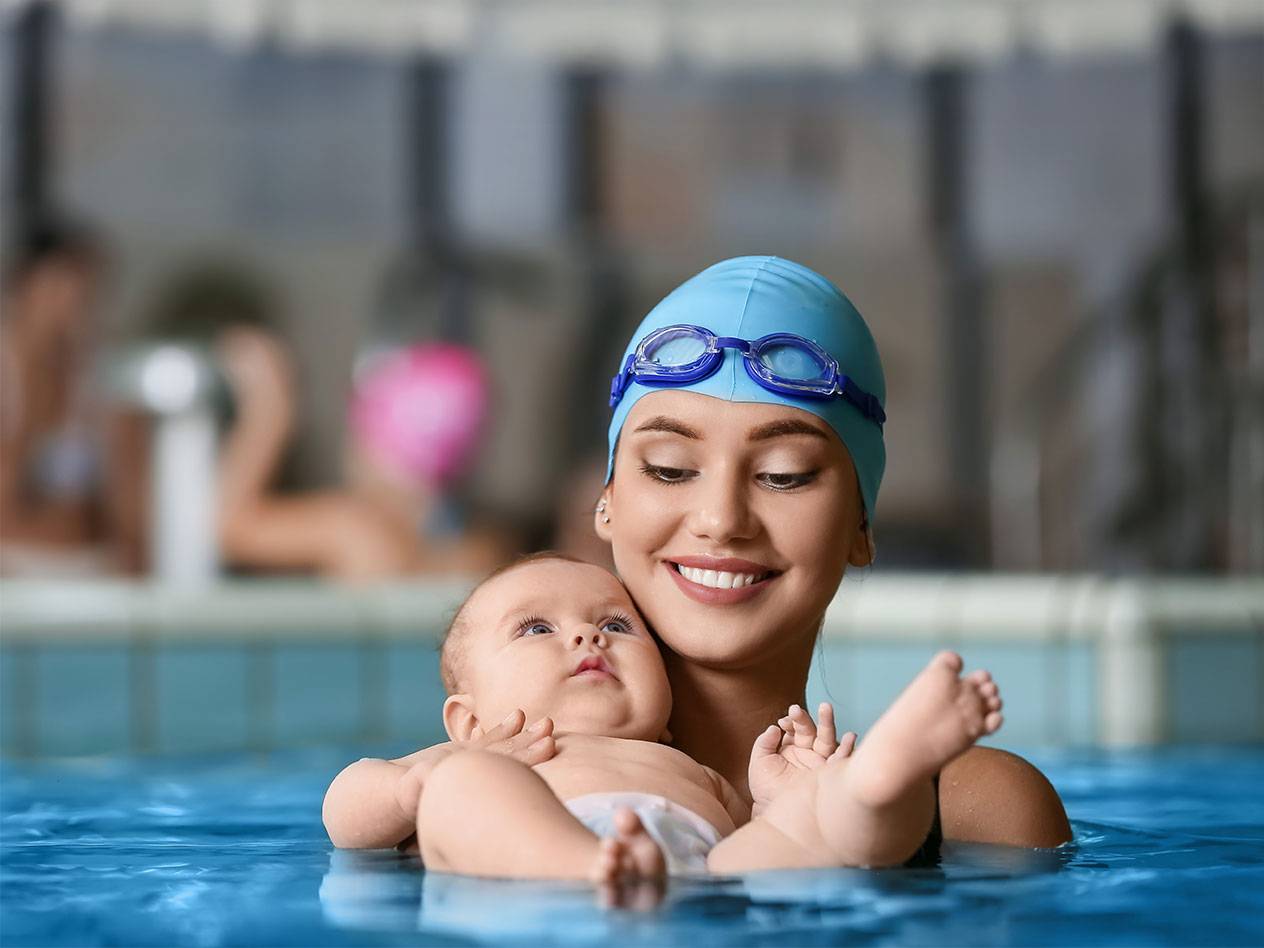
Does your baby enjoy bath time at home? That is already a great starting point for baby swimming in the big pool. However, you should avoid swim time in public pools until the fourth month. Most parents start classes between their baby's fourth and sixth month of life. By then, babies can already regulate their body temperature to a certain extent. However, this varies from child to child and, of course, also depends on whether your baby was born on time or as a preemie. If in doubt, seek advice from your pediatrician or midwife.
Slowly adjust to the temperature difference
Slowly get your baby used to the cooler water temperature typical in most swimming pools by making the bathwater at home a little cooler each time.
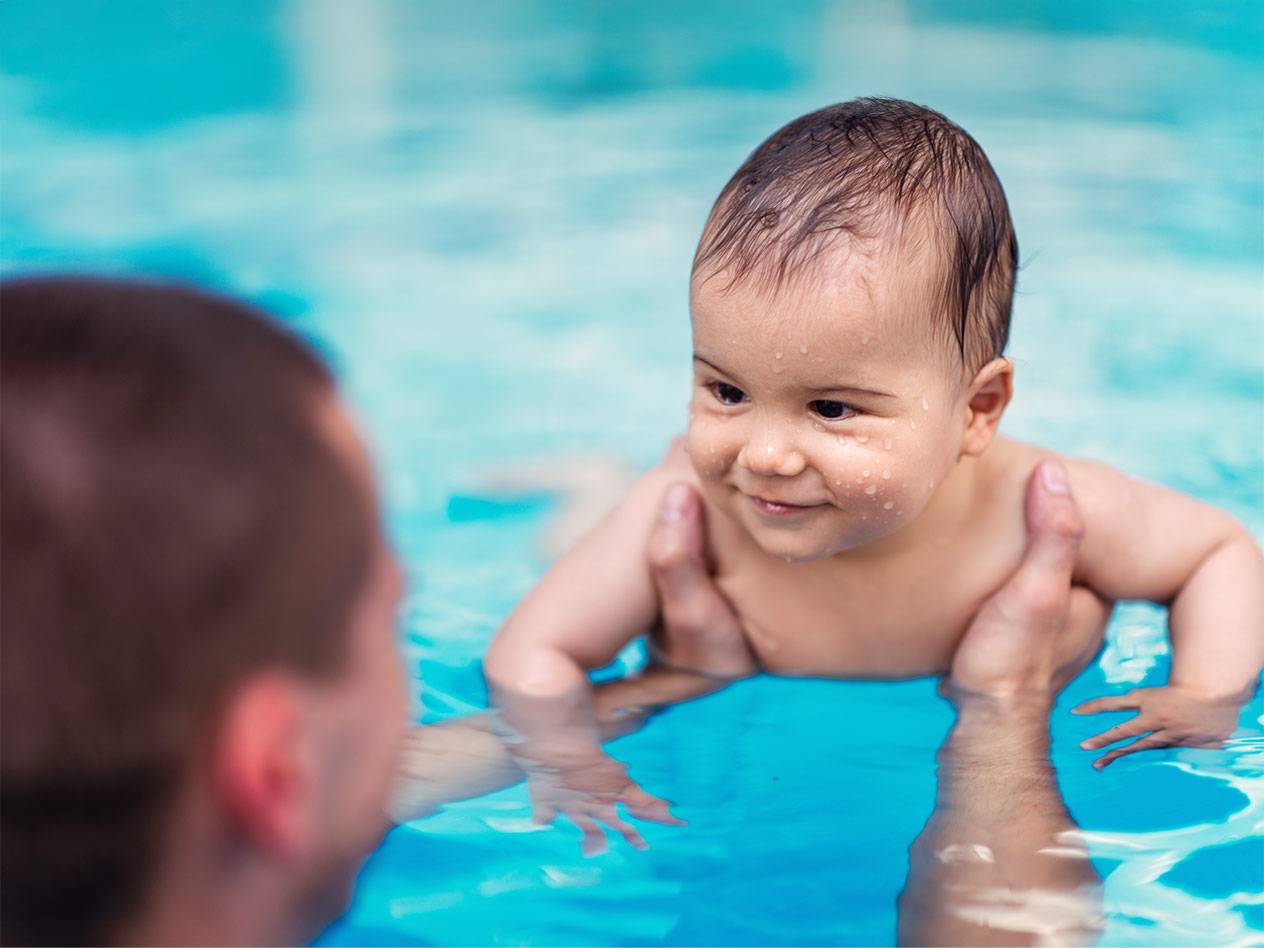
Physical development as another factor
Babies between four and six months old are becoming increasingly active and can usually hold their head up for a short time while lying on their stomach. This is an important prerequisite for being able to use holds during baby swimming where your baby lies tummy-down on the water. In most cases, the instructors will recommend that you alternate between lying on the back and stomach so that it does not become too tiring for your little one.
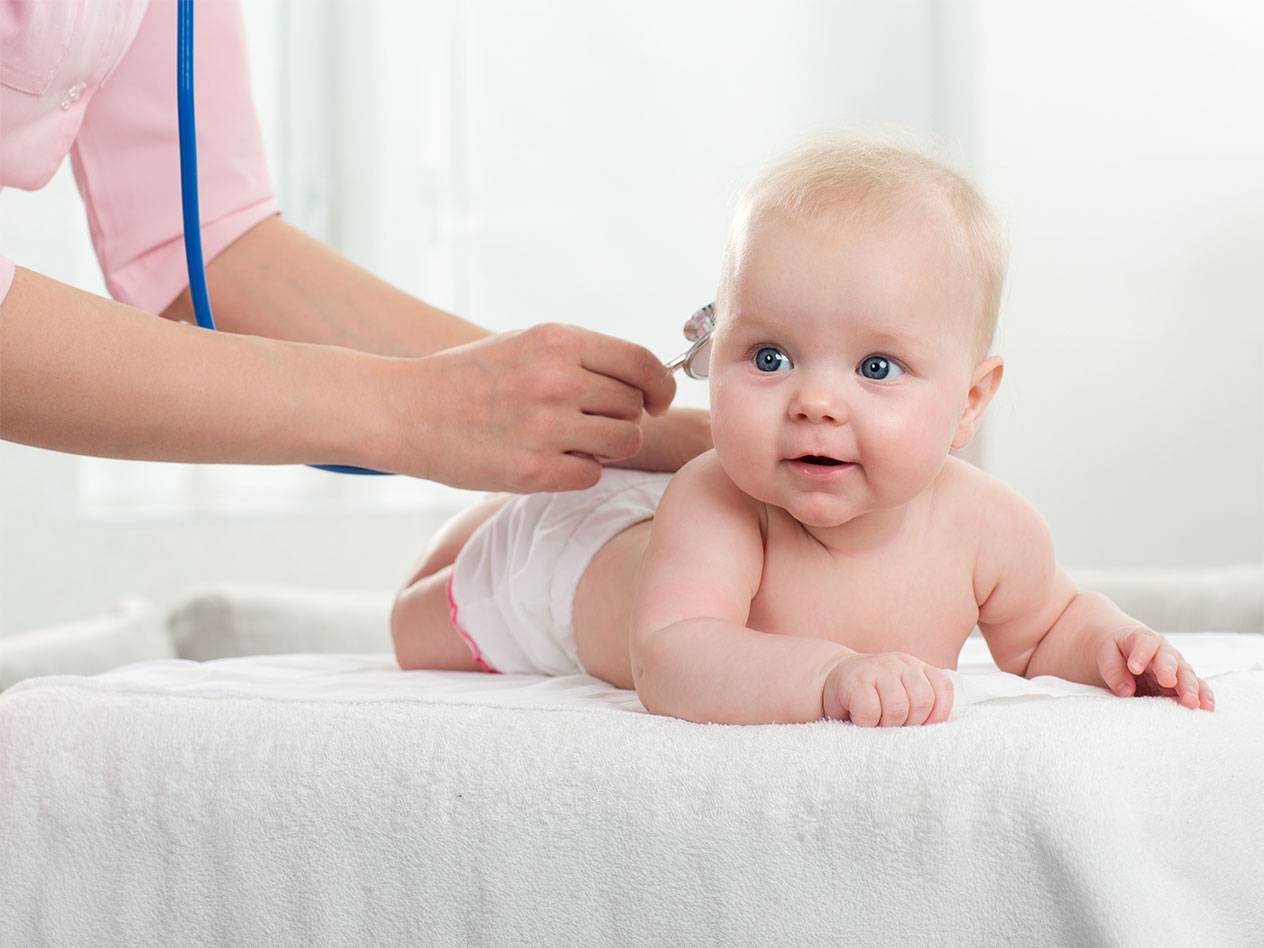
When to consult the pediatrician
Under certain circumstances, chlorine can promote allergies. If your baby has an allergy, or if you or your partner have allergies or even asthma, it is best to ask your pediatrician when they recommend starting baby swimming. Since baby swimming can promote the development of infections, especially gastrointestinal infections, the Standing Committee on Vaccination (STIKO) recommends having babies vaccinated against rotavirus at least 14 days before starting baby swimming.
Baby Swimming Gear – Checklist
- Swim diapers in the right size
- Hooded towel
- Bath toys (optional)
- Baby food / nursing meal / bottle for after swimming
- Bathrobe
- Mild body lotion for dry skin after bathing
- Upon consultation with the instructor: baby swim aids