How babies learn to talk and how you can support your little one through play
Your baby isn't even born yet, but their language development has already begun – in fact, it starts right in the womb. From the 22nd week of pregnancy, your baby hears the first sounds, listens to your voice, and perceives melodies. After birth, it won't be long before they say their first words like "ma-ma" and "da-da." However, you will have to be patient for quite a while longer before they start speaking their first full sentences.
When and how quickly babies learn to talk depends on many factors. You can support your little one's language development by encouraging them through play, sparking their joy for language. Here you will find interesting facts and helpful tips for age-appropriate language development for your baby.
What does your baby need to learn to talk?
From birth, your baby has everything they need for language acquisition. This includes the diaphragm, lips, cognitive abilities, tongue, and last but not least, hearing and vocal cords. All muscles and organs are designed and developed in such a way that learning to speak is a learning process for your little one that occurs in several developmental stages.
When do babies start talking? The developmental stages up to their first birthday
The first four weeks of life
Your little darling cries when they are hungry, tired, or uncomfortable. They are already communicating with you. Parents quickly figure out what is bothering their baby. In the first four weeks of life, your little ray of sunshine already recognizes your soothing vocal melody among other voices
Second month
At around six weeks, your sweet baby begins to make their first sounds, which manifest as cooing and grunting. This is also known as the first babbling phase. Many babies now also show their first conscious smile.
Third month
At this age, the first guttural sounds begin. The tongue slides into the back of the mouth, and the unconscious cooing turns into a gurgle with a few "r" sounds.
Fourth and fifth month
Your little darling is getting better and better at controlling their own voice. It is one of the first major milestones when your baby learns to speak, as they are now consciously using their voice. An early childhood monologue begins, your sweet baby laughs and squeals with joy, and starts to "babble". Some children are completely unstoppable now, while others are more reserved and only make a few sounds every now and then.
Sixth month
Around the sixth month, the second babbling phase begins, which is already quite similar to mature speech. Your baby is now putting their first syllables together – for example, it sounds like: "lalalalal".
Seventh to ninth month
Your little one is now forming entire chains of syllables. During this time, "mamamamam" eventually turns into "ma-ma". At first, this word has no meaning. However, based on your joyful reactions, your baby quickly associates these sounds with you. Soon they will consciously call out "Ma-Ma" to get your attention.
Ninth month
Language development is now in full swing, and the so-called post-babbling phase begins. Although your little darling consciously speaks very few words yet, they can already associate a name with hundreds of things, and more are added every day. Now it is only a matter of time before the first words, and later the first sentences, come pouring out of your sweet baby.
Important:
Every child is unique, and language acquisition does not always follow the same pattern. There are so-called "late talkers." These children soak up words like a sponge, but start speaking later than others. However, within a few weeks or months, they quickly catch up with their peers. During regular pediatric check-ups, your little one's language development will be monitored. However, if you are concerned that your little darling is not learning to speak properly, you should feel free to contact your pediatrician.
How you can help your baby learn to talk
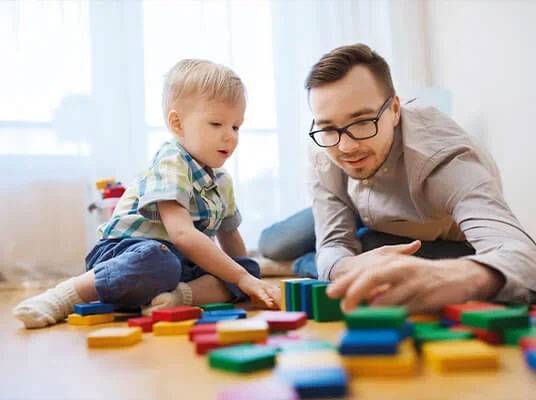
Reading aloud, singing, and storytelling – all of these are of great importance for your little one's language development. It is important that you adapt these methods to your baby's needs and stage of development. Explain and show them the world, even if you know your little darling doesn't understand everything yet. Background noises like the TV or radio usually overstimulate children. You should therefore keep these to a minimum in your baby's presence.
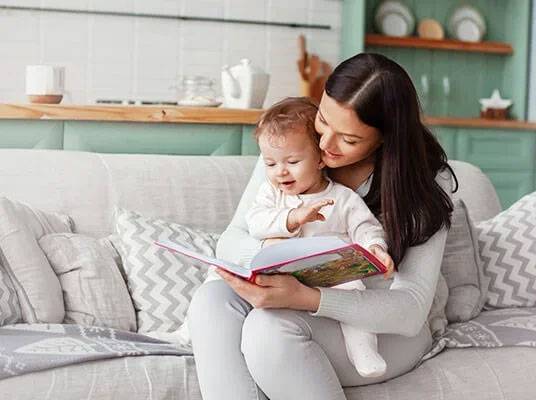
Toys that support children in learning to speak
Books are ideal for supporting your little one with language acquisition – provided they show interest in them. It is important that you don't just name the illustrations, but explain exactly what is happening in the pictures. Hand puppets – or even their favorite teddy bear – are also a great help, allowing you to tell stories or sing songs. Fingerplays also captivate children and support speech development.
Summary:
Your little one's first words are incredibly special for many parents and are eagerly awaited. When your baby learns to talk, there are many ways you can encourage and support them. The most important thing, however, is to talk to your little darling as much as possible from day one, naming everyday things and involving them in everything. At some point, you will notice just how much your baby already understands. Around their fifth birthday, language development is typically complete. However, your little one will continue to learn new words and connections throughout their entire life. After all, you never stop learning.