Healthy and delicious – make your own fresh juices and smoothies with a juicer or blender
Nutritionists recommend consuming between 14 and 23 ounces of fruits and vegetables daily. For many people, this recommendation is an almost unreachable goal. It’s no wonder, because especially in a stressful workday, there is often too little time for a truly healthy diet. Kitchen gadgets like juicers, blenders, or food processors are therefore ideal for preparing larger quantities of fruits or vegetables in no time, ready to consume. Once purchased, many can hardly imagine life without these practical appliances and enthusiastically realize: healthy eating has finally become a reality.
But when you are faced with the decision of which appliance to buy, some questions inevitably arise: What is the difference between the preparation methods? How do the various kitchen appliances work and what are their pros and cons? How do I get the most nutrients out of the fruits, and what is actually healthier: juice or a smoothie? In the following article, you will find out everything you need to know about juicing, blending, and food processing.
Juicing, blending, and chopping: What is the difference?
If you are considering buying a kitchen helper to process fruits and vegetables, you are spoiled for choice: Should it be a juicer, a blender, or would a food chopper be better? Which appliance best suits your needs primarily depends on your preferred way of preparing your food.
Juicers extract the liquid components from fruits and vegetables to produce pure juice, while the coarser parts are left behind as a byproduct. This so-called pulp is particularly rich in dietary fiber. Blenders, on the other hand, are designed to puree fruits and vegetables whole – the end result is typically smoothies, which contain all parts of the fruits and vegetables used and are therefore thicker. Food choppers provide an even coarser result, as these appliances merely chop without processing the inserted fruit and vegetable pieces into a puree.
How Juicers, Blenders, and Food Choppers Work and How to Use Them
Juicers, blenders, and food choppers differ not only in how they work, but also in how they are used. We explain the most important differences and special features.
Juicer
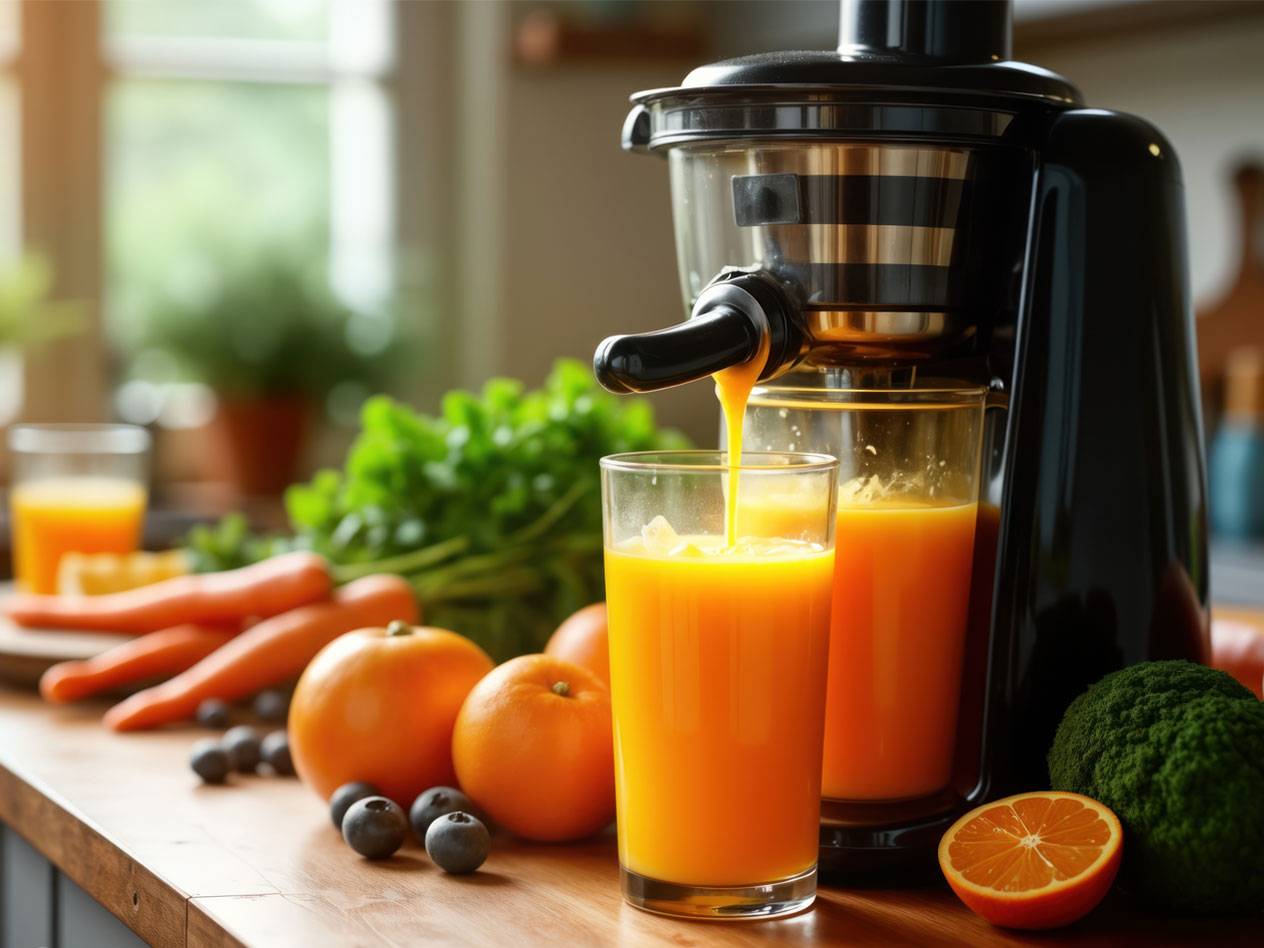
Make delicious homemade juice with a juicer
Juicers extract the liquid from individual pieces of fruit and vegetables, turning them into a delicious juice. The ingredients only need to be halved or roughly chopped before being put into the machine, and can even be added with stems and skins. Solid parts are left behind as pulp. Generally, there are two types of juicers: juice presses and centrifugal juicers.
While a juice press extracts juice using mechanical pressure, a centrifugal juicer chops the fruit at up to 15,000 RPM and separates solid and liquid components through a sieve. Juice presses process fruit and vegetables more gently, operate more quietly, and produce clearer juice than centrifugal juicers, but they are also usually significantly more expensive. Most modern juicers can turn almost any type of fruit and vegetable into juice that is not only tastier, but also healthier than industrially produced juice from the supermarket.
Juicing Without a Juicer
If you don't have a juicer but have a pressure cooker at home, you can easily juice your ingredients using steam. Fruits and vegetables with a high water content are perfect for this. Add 3.4 fl oz (100 ml) of water to the pressure cooker for every 1.1 lbs (500 grams) of fruit or vegetables, and equip it with a solid insert that acts as a collection bowl. Place the steamer basket on top of this before adding the washed fruits and vegetables to the pot. After that, all you have to do is turn on the pressure cooker – the steam will take care of the rest.
Blenders
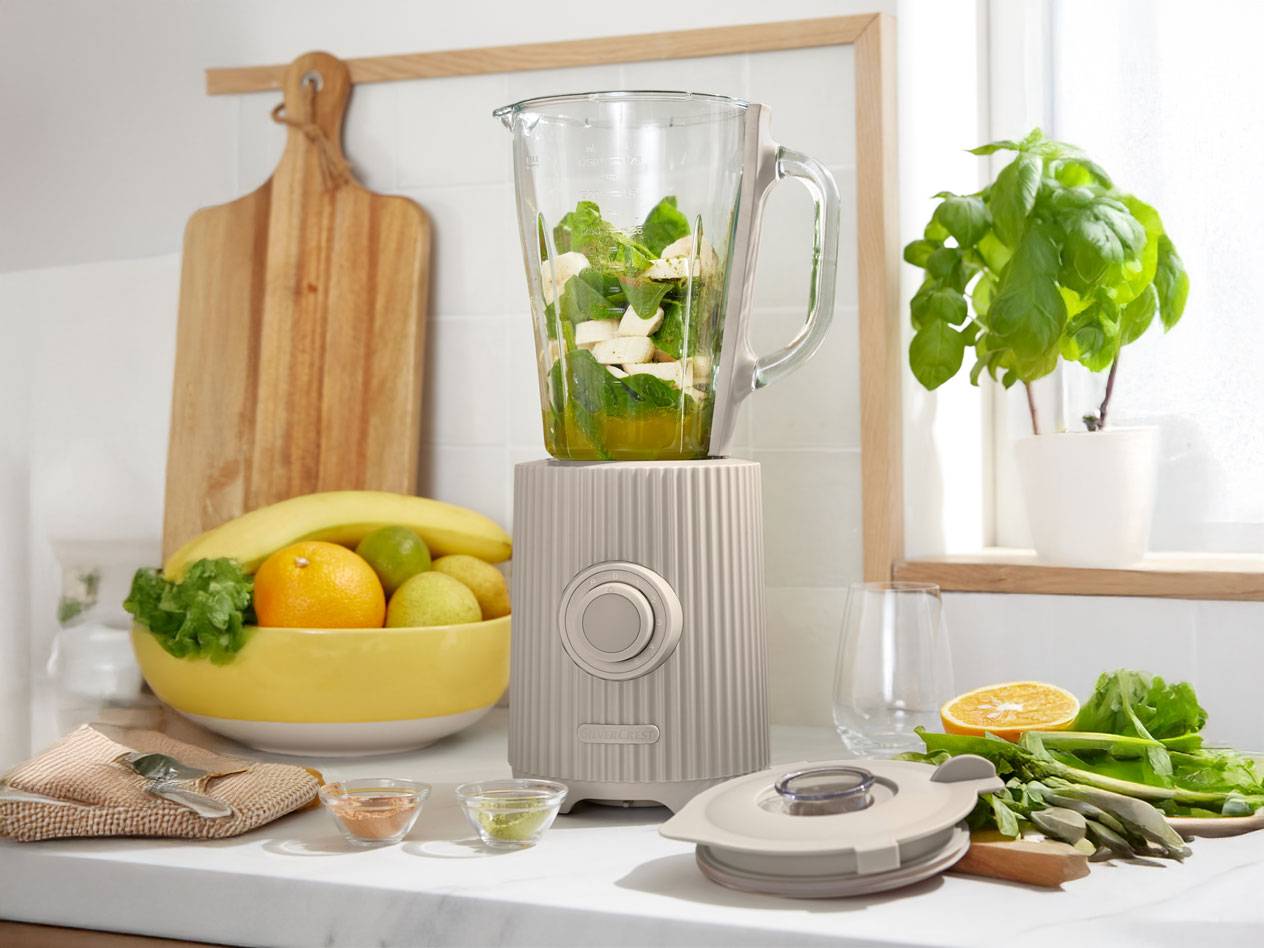
Countertop blenders and other mixers puree the added pieces of fruit and vegetables, processing them into a smooth, consistent mixture. The consistency of the final product depends on the rotation speed, i.e., the number of revolutions of the blender, the liquid content of the raw ingredients, and the amount of added water.
Since the fruit and vegetables are processed whole, they must be prepared accordingly. Seeds, stems, and peels should be removed. Before turning on the blender, make sure that the blades are not blocked. While high-performance blenders can easily start from a standstill even with harder ingredients or ice, larger and firmer ingredients should only be added during operation when using lower-powered appliances.
Food Choppers
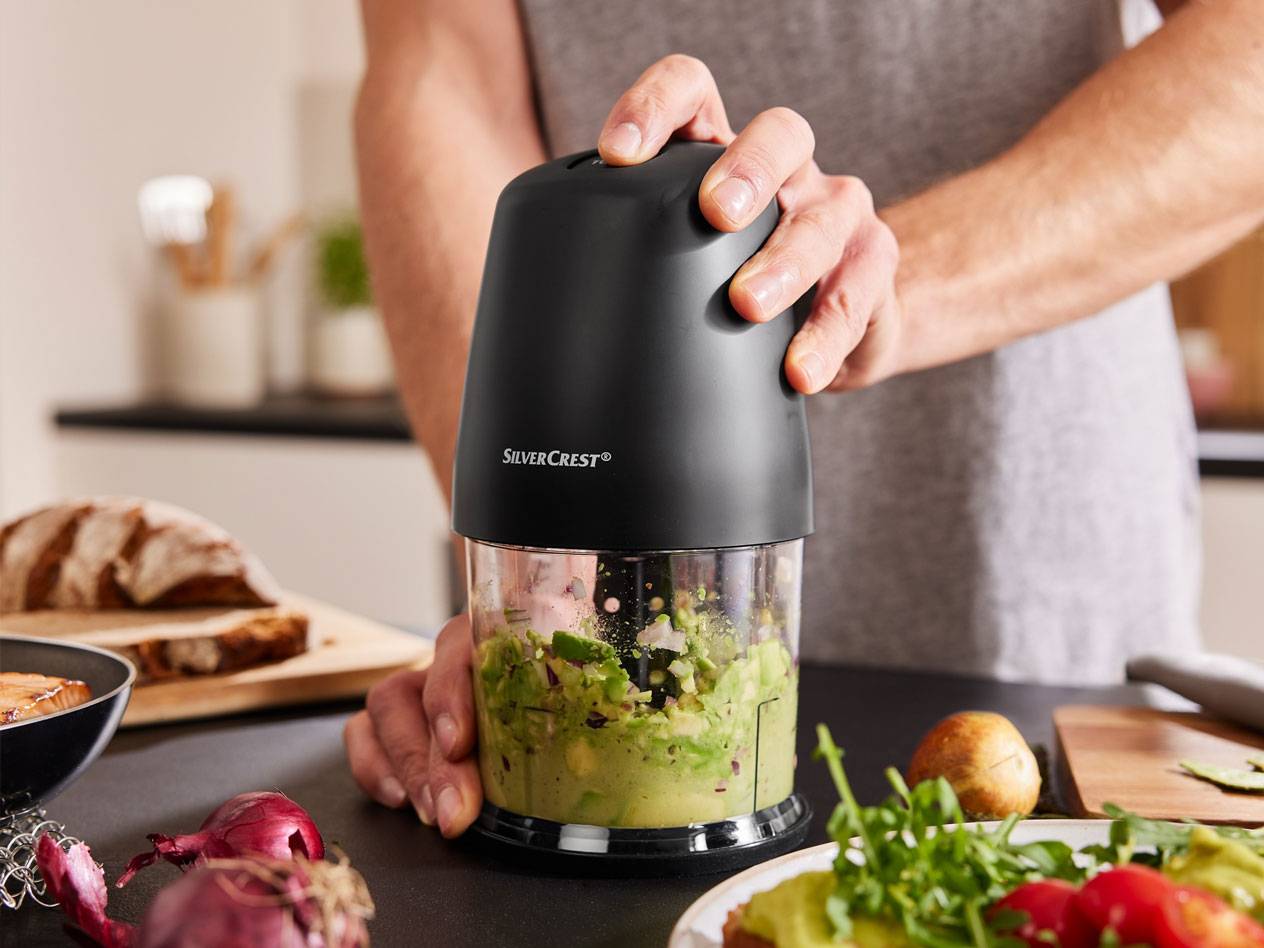
Food choppers work similarly to blenders, but are designed to process fruits, vegetables, and other foods into coarser pieces. With many models, the desired cut can be adjusted using different inserts. As with a blender, all fruits and vegetables must have seeds, stems, and, if necessary, their skin removed before being roughly pre-cut and placed into the appliance. When purchasing a suitable device, you should consider which foods you want to chop. For frozen and very hard foods, we recommend buying an extra-powerful appliance, while approximately 500 watts is sufficient for most other purposes.
Pros and Cons of Juicers, Blenders, and Food Choppers
Advantages of Juicers | Disadvantages of Juicers |
|---|---|
|
|
Pros of Blenders | Cons of Blenders |
|---|---|
|
|
Advantages of Choppers | Disadvantages of Choppers |
|---|---|
|
|

Which is better: Juice from a juicer or smoothies from a blender?
If you are trying to decide whether a juicer or a smoothie blender is the better choice, there are several factors to consider. Juices are easy to digest and can be made from almost any type of fruit or vegetable. Smoothies, on the other hand, are high in fiber and may not be ideal for people with sensitive digestion. However, unlike juices, smoothies retain more vitamins and nutrients because the entire fruit or vegetable is processed. It is also worth noting that basic smoothie blenders often struggle to properly chop leafy greens, herbs, and hard vegetables.
High-performance blenders, however, can easily process these types of vegetables into a smooth, creamy consistency, making them perfect for whipping up green smoothies. Another advantage of blenders over juicers is that they are much easier to clean and leave zero waste, as all ingredients are fully blended. Ultimately, whether a smoothie blender or a juicer is the right choice for you depends entirely on your personal preferences and your favorite fruits and vegetables.